Engineering The Next Generation Of Material Systems

Advancing the future of
intelligent materials & infrastructure

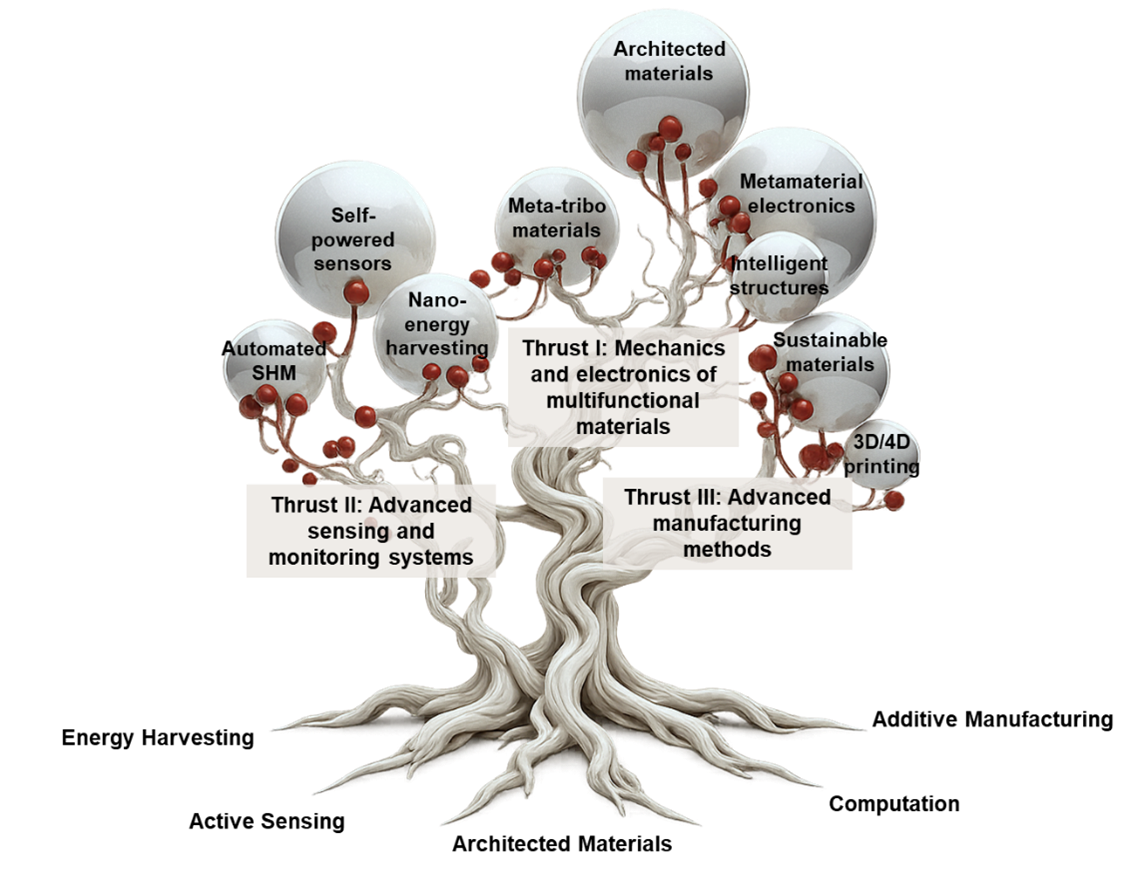
MetaMatter Labs is a research initiative led by Roshira Premadasa, focused on smart materials, self-powered systems, and next-generation infrastructure. The work integrates metamaterials, additive manufacturing, and AI-driven systems to enable adaptive, sensing, and energy-efficient engineering solutions.

Advanced Materials Research
Metamaterials & smart systems
Multidisciplinary Approach
AI, sensing & infrastructure
research-preview
Design • Function • Adaptation • Intelligence
research-thumbnail
research-thumbnail
research-thumbnail
Publications in Q1 journals & patented innovations
Smart MaterialsMetamaterialsAdditive ManufacturingSelf-powered SystemsAI-driven InfrastructureSmart MaterialsMetamaterialsAdditive ManufacturingSelf-powered SystemsAI-driven Infrastructure

Research

Key Research Projects

A selection of ongoing and completed research exploring metamaterials, smart infrastructure, biomedical systems, and advanced manufacturing.

Tunable Plug-and-Play Meta-Nanogenerators for Multi-Range Force Sensing

Tunable Plug-and-Play Meta-Nanogenerators for Multi-Range Force Sensing

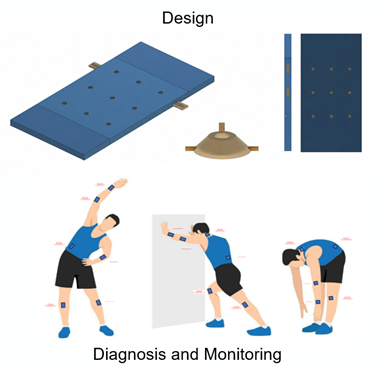
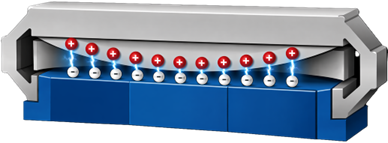
This project develops a modular meta-nanogenerator system that integrates triboelectric nanogenerators within additively manufactured mechanical metamaterial architectures to enable self-powered, multi-range force sensing. By tailoring geometric parameters through additive manufacturing, the sensing range and sensitivity can be reconfigured without altering materials or electronics. The plug-and-play design enables scalable deployment in structural health monitoring, smart infrastructure, and adaptive load sensing applications.

Digital Shape-Morphing Thermo-mechanical Metamaterials

Digital Shape-Morphing Thermo-mechanical Metamaterials

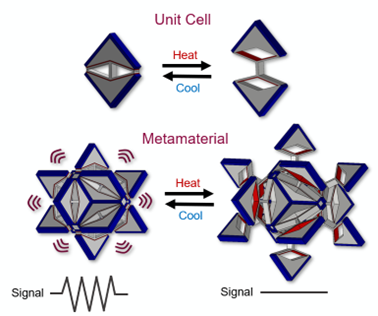
This project develops additively manufactured architected mechanical metamaterials capable of programmable shape morphing through thermo-mechanical coupling. By exploiting multi-stable geometries and temperature-dependent material behavior, the systems transition between discrete mechanical states that can be digitally encoded to enable mechanical logic, adaptive load redistribution, and autonomous structural reconfiguration. The resulting thermo-mechanical systems provide a pathway toward adaptive infrastructure components, deployable structures, and mechanically programmable materials.

Self-Sensing Cementitious Composites with Architected Aggregates

Self-Sensing Cementitious Composites with Architected Aggregates

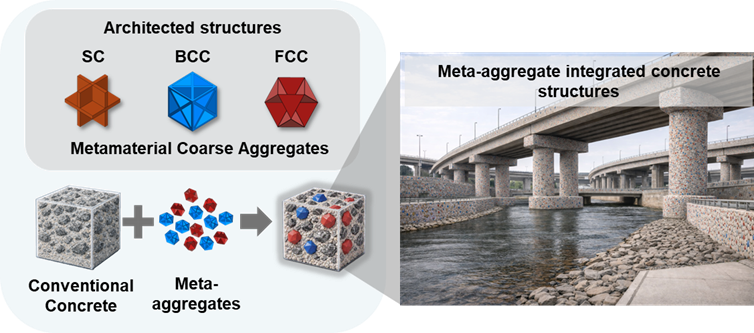
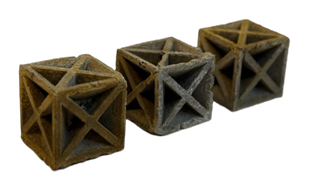
This project develops cementitious composites with inherent sensing capabilities through the integration of additively manufactured architected lattice structures as functional coarse aggregates. The research investigates architected plastic aggregates to tailor mechanical performance, reduce structural weight, and improve material efficiency; examines how additive manufacturing parameters influence the mechanical behavior and durability of printed aggregates; and enables self-sensing smart concrete through conductive matrices and triboelectric transduction. By linking aggregate architecture, fabrication processes, and electromechanical functionality, the work advances sustainable, load-bearing concrete systems capable of real-time structural state monitoring and extended service life.

Architected Plate Lattice Systems for Lightweight and High-Performance Structures

Architected Plate Lattice Systems for Lightweight and High-Performance Structures

This project investigates architected plate lattice systems as a material-efficient strategy for developing lightweight structural components with enhanced stiffness, strength-to-weight performance, and energy absorption capacity. The research explores plate lattice architectures across multiple material systems, including polymeric, composite, and cementitious implementations, to understand the influence of geometry, material selection, and fabrication methods on mechanical performance and failure behavior. By enabling tunable structural response and improved material efficiency, these systems support resilient infrastructure, protective structures, and multifunctional structural applications.

Wearable Electrochemical Sensing Systems for Cystic Fibrosis Screening

Wearable Electrochemical Sensing Systems for Cystic Fibrosis Screening

This project develops a wearable electrochemical sensing platform for rapid, non-invasive screening of cystic fibrosis through sweat analysis. The system integrates microfluidic sweat collection, ion-selective sensing, and portable signal acquisition to enable real-time chloride detection for early diagnosis. By emphasizing low-cost fabrication, user-friendly operation, and point-of-care deployment, the technology supports accessible screening and continuous monitoring in clinical and remote healthcare settings.This project develops a wearable electrochemical sensing platform for rapid, non-invasive screening of cystic fibrosis through sweat analysis. The system integrates microfluidic sweat collection, ion-selective sensing, and portable signal acquisition to enable real-time chloride detection for early diagnosis. By emphasizing low-cost fabrication, user-friendly operation, and point-of-care deployment, the technology supports accessible screening and continuous monitoring in clinical and remote healthcare settings.

Metamaterial-Based Self-Powered Strain Sensing Systems

This project develops additively manufactured mechanical metamaterial architectures integrated with triboelectric nanogenerators to enable self-powered strain sensing for structural deformation monitoring. By tailoring architected geometries to control deformation pathways and sensitivity, the system enables high-resolution strain detection across tunable measurement ranges. The resulting sensing platforms provide real-time insight into structural behavior for applications in structural health monitoring and intelligent infrastructure systems.

Self-Recognizing Composite Structural Elements for Intelligent Infrastructure

This project develops multifunctional composite structural elements with integrated sensing and energy harvesting capabilities to enable self-recognizing infrastructure systems. Through architected material design and embedded triboelectric transduction mechanisms, the load-bearing components function simultaneously as structural members, sensing media, and energy harvesters. The technology is applicable to both new construction and retrofitting applications, where composite strengthening systems provide structural rehabilitation while enabling self-powered condition monitoring. This integrated approach enhances durability, reduces maintenance requirements, and supports cost-effective lifecycle management of aging infrastructure.

Team

Research Lead

Meet the researcher behind MetaMatter Labs and the work driving innovation in intelligent materials and systems.

Roshira Premadasa

Roshira Premadasa

Graduate Research Assistant
Department of Civil and Environmental Engineering
New Mexico State University

Education

Ph.D. in Civil Engineering
New Mexico State University (2023–Present)
M.Sc. in Civil Engineering
New Mexico State University (2025)
B.Sc. in Civil Engineering
SLIIT (2022)

Honors & Awards

  • Bhatti Family Graduate Assistant Award (2026)
  • First Place, 3-Minute-Thesis Competition (2026)
  • Distinguished Graduate Assistant Award – Doctoral (2025)
  • First Place, Bold Idea Challenge (2024)
  • Second Place, Aggie Shark Tank (2024)
  • NMSU Outstanding Graduate Student Fellowship (2024)
  • Merit Award – SLIIT (2022)

Professional Service

Journal Reviewer — Measurement Journal / Elsevier

Publications

Research publications & scholarly work

Google Scholar | IF: 2-year Impact Factor

Journal Papers

  • R. Premadasa, P. Almasi, S. Ghimire, W. Dong, C. Zhang, P. Jiao, Q. Zhang, “Tunable Plug-and-Play Meta-Nanogenerator Materials for Multi‐Range Force Measurements”, Advanced Science, In-press, 2026. https://doi.org/10.1002/advs.202600009 (Q1, IF=14.1)
  • R. Premadasa, P. Almasi, Z. Wan, A. Alavi, Q. Zhang, “Digital Shape Morphing Thermo-Mechanical Metamaterials”, Materials Horizons, In-press, 2025. https://doi.org/10.1039/D5MH02021B (Q1, IF=10.7)
  • R. Premadasa, Z. Wan, P. Almasi, K. Barri, H. Zhang, P. Jiao, Q. Zhang, “CFTrack: Advanced Diagnostic, Monitoring, and Tracking Device for Cystic Fibrosis Care,” ACS Sensors, In-press, 2024. https://doi.org/10.1021/acssensors.4c01669 (Q1, IF=9.1)
  • S. Li, X. Tang, W. Guo, Y. Li, L. Hong, Z. Wan, H. Lu, R. Premadasa, Q. Zhang, H. Salehi, P. Jiao, “Numerical Simulations of Piezoelectricity and Triboelectricity: From Materials, Structures to Devices,” Applied Materials Today, In-press, 2024. https://doi.org/10.1016/j.apmt.2024.102092 (Q1, IF = 8.3)
  • P. Almasi, R. Premadasa, S. Ghimire, P. Jiao, Q. Zhang, “Plate Lattices Superior Weight-to-Strength Mechanical Metamaterials: Mechanics, Design, Manufacturing, and Applications,” Materials Horizons, In-review, 2026. (Q1, IF=10.7)
  • P. Almasi, Y. Xiao, R. Premadasa, J. Boyle, D. Jauregui, A. Khodagholi, Z. Wan, Q. Zhang, “Meta-Heuristic-Driven Continuous Path Optimization for Area Coverage in UAV-based Infrastructure Inspection,” Automation in Construction, In-revision, 2026.
  • P. Almasi, Y. Xiao, R. Premadasa, H. Yin, J. Boyle, D. Jauregui, Z. Wan, Q. Zhang, “A General Method for Pre-flight Preparation in Data Collection for UAV-based Bridge Inspection,” Drones, In-press, 2024. https://doi.org/10.3390/drones8080386 (Q1, IF = 4.4)

Conference Papers

  • H. Hussain, J. Diaz, R. Premadasa, Q. Zhang, C. Mahajan, “Multi-Material 3D Plate Lattice Structures Using Fused Filament Fabrication Technique,” IISE Annual Conference, 2024.
  • R. Premadasa, J. Perera, “Effects of Manufactured Sand on the Properties of Normal and High Strength Concrete”, SICET 2022.

Conference Presentations

2025

ASCE Engineering Mechanics Institute (EMI) 2025, University of California, Irvine, CA, USA

Digital Shape-morphing Thermo-mechanical Metamaterials

Tunable Plug-and-Play Meta-Nanogenerator Materials for Multi‐Range Force Measurements

Solid Freeform Fabrication (SFF) Conference 2025, University of Texas, Austin, TX, USA

Design and Fabrication of Additively Manufactured Multifunctional Materials with Intrinsic Sensing and Morphological Computing Capabilities

New Mexico Transportation Conference 2025, New Mexico State University, Las Cruces, NM, USA

Self-recognizing Architected Materials for Smart Civil Infrastructure Systems

2024

ASCE Engineering Mechanics Institute (EMI) 2024, University of Illinois-Urbana Champagne, IL, USA

CFTrack: Advanced Monitoring and Tracking Device for Affordable Cystic Fibrosis Care

Innovate New Mexico (INM) 2024, Albuquerque, NM, USA

EcoCFTrack: Advanced Monitoring and Tracking Device for Affordable Cystic Fibrosis Care

New Mexico Transportation Conference 2024, New Mexico State University, Las Cruces, NM, USA

Self-recognizing Composite Structural Elements (SR-CSEs) for Smart Civil Infrastructure System

2022

SLIIT International Conference on Engineering and Technology, Sri Lanka Institute of Information Technology, Malabe, Sri Lanka

Effects of Manufactured Sand on the Properties of Normal and High Strength Concrete

Patents

Intellectual property and technology disclosures

Mechanical Metamaterial Augmented Force Sensing

R. Premadasa, Q. Zhang

U.S. Provisional Patent, May 2025

EcoCFTrack: Advanced Diagnostic, Monitoring, and Tracking Device for Affordable Cystic Fibrosis Care

R. Premadasa, Q. Zhang

U.S. Utility Patent, February 2025

Thermo-Mechano-Electrical Metamaterial Modular Computation System

R. Premadasa, Q. Zhang

U.S. Utility Patent, November 2025

Research Interests

Core areas of research and interdisciplinary exploration

Smart Concrete & Multifunctional Structural Materials

  • Self-sensing concrete for real-time strain, damage, and load monitoring.
  • Energy-harvesting and self-powered structural materials.
  • Lightweight and modular concrete structural systems.

Engineered Marine Structures for Coastal Restoration and Offshore Energy

  • Metamaterial-based structural solutions for wave loading and impact resistance.
  • Bioactive and modular 3D printed concrete systems for coral reef restoration and floating solar-farm foundations.
  • Wave-induced energy harvesting for self-powered offshore infrastructure.

Self-powered and Compact Biomedical Devices and Implants

  • Triboelectric and energy-harvesting mechanisms for battery-free medical devices.
  • Architected materials for compact and mechanically adaptive patient-specific implants.
  • Integrated sensing platforms for continuous physiological monitoring.

Additive Manufacturing for Advanced Construction

  • 3D printed smart concrete and architected structural systems.
  • Topology and process parameter optimized printable structures for strength and multifunctionality.
  • Sustainable additive manufacturing for next-generation infrastructure.

Digital Twins & Self-Sensing Infrastructure Systems

  • Material-integrated sensing for real-time structural state awareness.
  • AI-driven damage detection and lifecycle performance forecasting.
Research visualization

Get in Touch

For collaborations, research opportunities, or academic inquiries